
A B2B referral program helps companies turn satisfied customers, partners, and advocates into a repeatable source of qualified leads. When the program is easy to join, simple to share, and tightly connected to sales follow-up, it can become a lower-friction acquisition channel than cold outbound alone.
For B2B teams, the goal is not just “more referrals.” It is better-fit leads, stronger trust at the first conversation, and a cleaner path from recommendation to revenue. That is why the best programs combine clear incentives, strong tracking, CRM visibility, and a referral experience that feels professional from the first share.
This section shows why the referral process matters and how value delivery creates the "aha" moment that motivates sharing. It explains how to pick referrers, set incentives, and use email or cash rewards to drive action.
If you are evaluating tools to support this motion, a dedicated B2B referral program software platform can help you automate tracking, rewards, and handoff without adding manual work across marketing and sales.
For B2B teams, the goal is not just “more referrals.” It is better-fit leads, stronger trust at the first conversation, and a cleaner path from recommendation to revenue. That is why the best programs combine clear incentives, strong tracking, CRM visibility, and a referral experience that feels professional from the first share.
This section shows why the referral process matters and how value delivery creates the "aha" moment that motivates sharing. It explains how to pick referrers, set incentives, and use email or cash rewards to drive action.
If you are evaluating tools to support this motion, a dedicated B2B referral program software platform can help you automate tracking, rewards, and handoff without adding manual work across marketing and sales.
Key Takeaways
- B2B referral programs work best when they focus on qualified pipeline, not just referral volume.
- Trust matters more in B2B than in most other channels, especially when buying decisions involve multiple stakeholders.
- Referred customers often deliver stronger long-term value. Research published by Wharton found that referred customers were more valuable over time than similar non-referred customers.
- Choose the right referrers and incentives to boost participation.
- The best advocates are usually satisfied customers, successful partners, and users who have already seen measurable value.
- Referral tracking, CRM routing, and timely sales follow-up are just as important as the reward itself.
Why B2B Referrals Matter?
Trust is the primary purchase trigger. A recommendation from a satisfied customer beats cold outreach every time.
That trust advantage matters. Nielsen’s trust research found that recommendations from people consumers know remain among the most trusted forms of influence. While B2B purchases are more complex than consumer purchases, the same principle applies.
There is also a business case beyond trust alone. In the Wharton study on referral programs and customer value, referred customers showed higher retention and higher long-term value than comparable non-referred customers. For B2B teams under pressure to improve acquisition efficiency, that makes referrals worth treating as a real growth channel rather than an informal side effect.
In B2B, buyers rarely make decisions in isolation. Recommendations move through private emails, DMs, internal Slack threads, forwarded decks, and side conversations long before a lead fills out a form. LinkedIn’s summary of dark social in B2B highlights how much influence these private sharing behaviors can have on discovery and vendor evaluation.
Jamin Ball’s Q1 2025 analysis shows CAC payback for public SaaS has stretched to 57 months. In that context, converting customers into advocates lowers acquisition cost and speeds sales cycles.
That trust advantage matters. Nielsen’s trust research found that recommendations from people consumers know remain among the most trusted forms of influence. While B2B purchases are more complex than consumer purchases, the same principle applies.
There is also a business case beyond trust alone. In the Wharton study on referral programs and customer value, referred customers showed higher retention and higher long-term value than comparable non-referred customers. For B2B teams under pressure to improve acquisition efficiency, that makes referrals worth treating as a real growth channel rather than an informal side effect.
In B2B, buyers rarely make decisions in isolation. Recommendations move through private emails, DMs, internal Slack threads, forwarded decks, and side conversations long before a lead fills out a form. LinkedIn’s summary of dark social in B2B highlights how much influence these private sharing behaviors can have on discovery and vendor evaluation.
Jamin Ball’s Q1 2025 analysis shows CAC payback for public SaaS has stretched to 57 months. In that context, converting customers into advocates lowers acquisition cost and speeds sales cycles.
What Makes a B2B Referral Program Different from a B2C Program?
A B2C refer-a-friend campaign is often built for quick sharing and fast conversion. A B2B referral program is different. The sales cycle is longer, the buying group is larger, and the lead has to be routed correctly once it enters the pipeline.
That means a B2B referral motion usually needs:
In many cases, the strongest B2B programs also go beyond customers. They include consultants, agency partners, channel relationships, and strategic allies. If partner-led referrals are part of your growth model, this is where partner referral software becomes especially relevant.
That means a B2B referral motion usually needs:
- Clear qualification rules
- Visibility into which advocate referred which prospect
- CRM integration and attribution
- Sales-ready context for follow-up
- Reward rules that reflect deal quality, not just volume
In many cases, the strongest B2B programs also go beyond customers. They include consultants, agency partners, channel relationships, and strategic allies. If partner-led referrals are part of your growth model, this is where partner referral software becomes especially relevant.
Assess Your Readiness Before You Launch
a B2B referral program
Not every company is ready to scale referrals immediately. A referral program will amplify what already works. If customers are not reaching value, if onboarding is weak, or if sales cannot follow up consistently, the program will underperform no matter how attractive the reward looks.
Before launch, make sure you can say yes to most of these questions:
If the answer is “not yet,” fix the operational gaps first. A referral program should make momentum easier to scale, not create new manual work.
Before launch, make sure you can say yes to most of these questions:
- Do customers clearly understand the value of your product or service?
- Are there existing users or partners who already recommend you informally?
- Can your team track who referred whom and what happened next?
- Can sales respond quickly to referred leads?
- Do you have a reward process that is consistent and easy to explain?
If the answer is “not yet,” fix the operational gaps first. A referral program should make momentum easier to scale, not create new manual work.
Define the Right Goals and Metrics

The best B2B referral programs start with a business goal, not a gimmick. Decide whether the program is meant to increase qualified leads, shorten time-to-close, reduce customer acquisition cost, expand into new verticals, or improve retention through advocacy.
Then track metrics that reflect real business value:
This is also where budget discipline matters. Reward design, software choice, and payout operations should stay aligned with expected value per deal. If you need to model cost carefully across tiers or rollout stages, your referral program pricing framework should be part of planning from the start.
Then track metrics that reflect real business value:
- Referral participation rate
- Number of qualified referred leads
- Referral-to-opportunity conversion rate
- Referral-to-customer conversion rate
- Average deal size from referred leads
- Time-to-close
- Customer acquisition cost from referrals
- Revenue influenced by referrals
This is also where budget discipline matters. Reward design, software choice, and payout operations should stay aligned with expected value per deal. If you need to model cost carefully across tiers or rollout stages, your referral program pricing framework should be part of planning from the start.
Use a trackable link for each referrer so attribution is accurate. Align email and in-app content with the goal so users know the value of sharing.
Identifying Your Best Advocates
Find who already talks about your work and make it easy for them to share.
The best referrers are rarely the loudest people in your database. They are the ones who have already reached meaningful value and can credibly explain why your solution works.
Target loyal customers who renew, expand usage, or leave positive reviews. These users show measurable success with the product and are more likely to recommend it to peers.
Look for power users who deeply understand the value and can explain it in their network. Avoid asking for referrals during troubleshooting calls; timing matters.
Use NPS scores, renewal data, and usage trends to segment users. Send requests after a successful support interaction or a clear customer win.
Create targeted outreach that nurtures referrers into long-term ambassadors. Small, timely asks and relevant incentives help turn trust into steady leads for sales and marketing.
The best referrers are rarely the loudest people in your database. They are the ones who have already reached meaningful value and can credibly explain why your solution works.
Target loyal customers who renew, expand usage, or leave positive reviews. These users show measurable success with the product and are more likely to recommend it to peers.
Look for power users who deeply understand the value and can explain it in their network. Avoid asking for referrals during troubleshooting calls; timing matters.
Use NPS scores, renewal data, and usage trends to segment users. Send requests after a successful support interaction or a clear customer win.
Create targeted outreach that nurtures referrers into long-term ambassadors. Small, timely asks and relevant incentives help turn trust into steady leads for sales and marketing.
- Prioritize users who expanded accounts or gave strong testimonials.
- Segment by success signals and craft short, personal asks.
- Track which referrers produce the best referrals and double down.
Design Incentives That Feel Professional
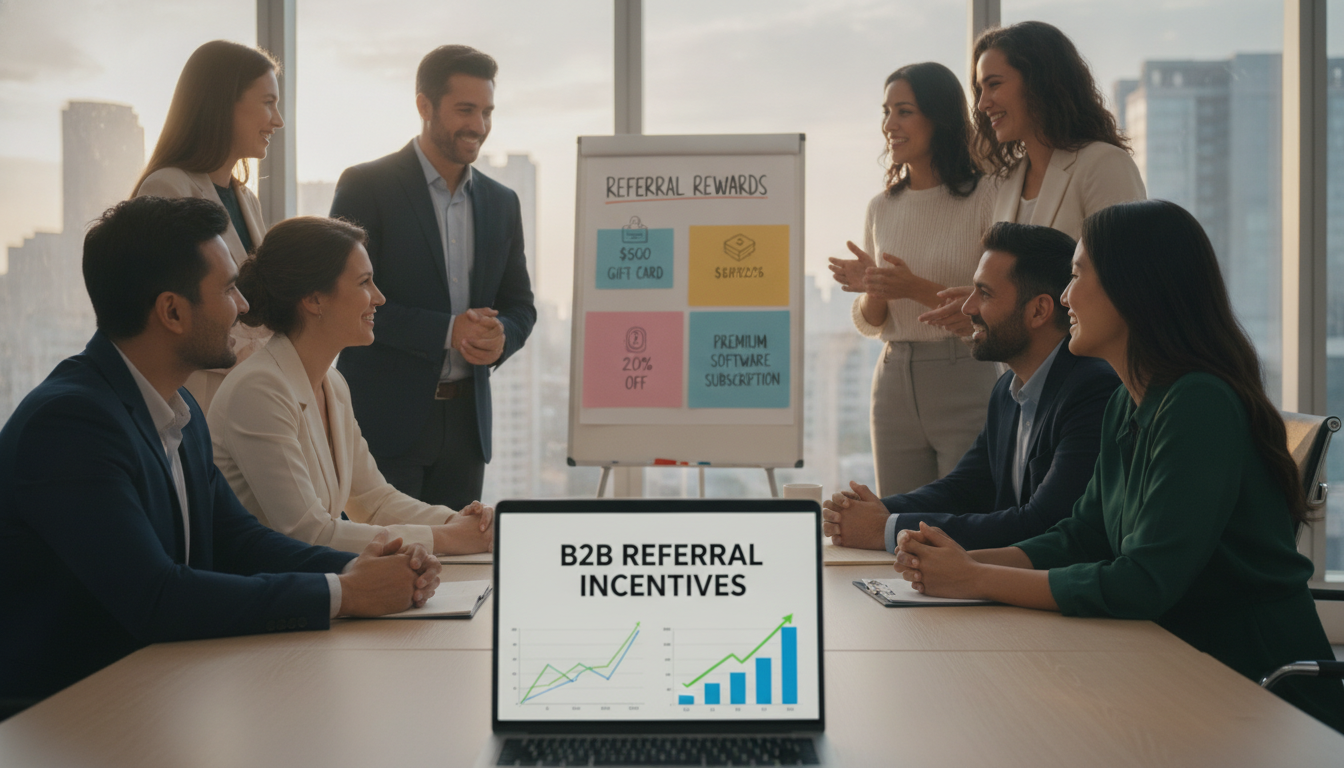
The right incentive makes sharing feel like a useful shortcut, not a sales pitch.
Start by matching rewards to what customers value: flexibility, relevance, and low friction.
Start by matching rewards to what customers value: flexibility, relevance, and low friction.
B2B incentives should feel appropriate to the relationship and the value of the opportunity. The goal is to motivate sharing without making the recommendation feel transactional or awkward.
Common B2B incentive options include:
Double-sided incentives can work especially well when you want the referral to feel useful to both sides. They reduce friction for the prospect and make the advocate’s outreach easier.
Keep the structure simple. If the rules are hard to understand, participation drops. If the reward is too small, it feels forgettable. If it is too large, it can reduce trust or attract low-quality referrals.
- Cash rewards
- Prepaid cards
- Account credits
- Service discounts
- Charitable donations
- Exclusive access, consulting, or premium support benefits
- Double-sided rewards for both the advocate and the new customer
Double-sided incentives can work especially well when you want the referral to feel useful to both sides. They reduce friction for the prospect and make the advocate’s outreach easier.
Keep the structure simple. If the rules are hard to understand, participation drops. If the reward is too small, it feels forgettable. If it is too large, it can reduce trust or attract low-quality referrals.
Reduce Friction in the Referral Process
A referral program should never make advocates work harder than necessary. The easier it is to share, the more likely people are to do it.
That means your program should provide:
The referral flow should also match how B2B buyers actually share vendors. That includes email, direct message, partner handoff, and internal forwarding. Since much of B2B discovery happens through private sharing, it helps to make your content and referral assets easy to pass along in those channels.
That means your program should provide:
- A unique referral link
- Short prewritten messaging
- One-click copy and share actions
- Clear explanation of what happens next
- Visible reward status
- Fast confirmation when a referral is received
The referral flow should also match how B2B buyers actually share vendors. That includes email, direct message, partner handoff, and internal forwarding. Since much of B2B discovery happens through private sharing, it helps to make your content and referral assets easy to pass along in those channels.
Promoting Your Program Across Multiple Channels

Promoting a successful program means meeting users where they already engage.
Use email, in-app messages, and social to keep the initiative visible. Email campaigns should be short and highlight the incentive with a clear share link.
Place in-app nudges at success moments — when a user hits an "aha" or finishes a key workflow. That timing raises conversions because users are already excited.
Use email, in-app messages, and social to keep the initiative visible. Email campaigns should be short and highlight the incentive with a clear share link.
Place in-app nudges at success moments — when a user hits an "aha" or finishes a key workflow. That timing raises conversions because users are already excited.
Timing Your Outreach for Maximum Impact
Repeat the message across channels without being pushy. Space messages over weeks and tie them to real events, like renewals or product milestones.
- Keep copy concise and actionable so people know what to do next.
- Leverage community posts and PR to reach influencers who may not be active users.
- Provide one-click share links and short swipe copy to lower effort.
Route Referrals into CRM and Sales Follow-Up
This is where many B2B referral programs fail. They generate interest, but the handoff is weak.
A strong B2B referral workflow should do four things well:
1. Capture the referral source accurately.
2. Push the lead into your CRM with context.
3. Trigger the right owner or workflow.
4. Keep advocate, prospect, and internal team status visible.
That is why referral software integrations matter. The program should not sit outside your growth stack. It should connect to the systems where your team already works.
For example, a HubSpot referral integration can help standardize enrollment, automate referral invites from lifecycle stages, and route referred leads into existing sales and marketing workflows. That makes it easier to move from “someone mentioned us” to a real pipeline event with attribution attached.
A strong B2B referral workflow should do four things well:
1. Capture the referral source accurately.
2. Push the lead into your CRM with context.
3. Trigger the right owner or workflow.
4. Keep advocate, prospect, and internal team status visible.
That is why referral software integrations matter. The program should not sit outside your growth stack. It should connect to the systems where your team already works.
For example, a HubSpot referral integration can help standardize enrollment, automate referral invites from lifecycle stages, and route referred leads into existing sales and marketing workflows. That makes it easier to move from “someone mentioned us” to a real pipeline event with attribution attached.
Use Technology to Scale Without Adding Operational Drag
As your program grows, manual tracking becomes a bottleneck. The right system helps you scale without creating extra admin work across growth, RevOps, and finance.
Look for software that supports:
This is also a good place to strengthen trust. Show prospects and advocates that your process is organized, transparent, and easy to understand. The more professional the experience feels, the more likely people are to participate and refer again.
Look for software that supports:
- Referral tracking and attribution
- Flexible reward logic
- Parrtner and customer referral flows
- CRM and marketing automation integrations
- Payout visibility
- Analytics and reporting
- Multi-currency or global reward support where needed
This is also a good place to strengthen trust. Show prospects and advocates that your process is organized, transparent, and easy to understand. The more professional the experience feels, the more likely people are to participate and refer again.
Avoid Common B2B Referral Mistakes

Even good programs can underperform when the details are weak. Common mistakes include:
You should also avoid building the article or landing page around vague claims. Buyers want specifics: who the program is for, how referrals are tracked, what rewards are possible, and how the lead reaches sales.
- Asking for referrals before customers see value
- Rewarding volume instead of lead quality
- Making the process hard to understand
- Failing to route referred leads quickly
- Hiding program rules or reward timing
- Treating B2B referrals like a consumer coupon campaign
- Publishing educational content with no path into commercial pages
You should also avoid building the article or landing page around vague claims. Buyers want specifics: who the program is for, how referrals are tracked, what rewards are possible, and how the lead reaches sales.
If you want to strengthen decision-stage trust, it also helps to connect educational content to supporting commercial assets like referral program examples, product pages, pricing, and integration documentation.
Conclusion
A strong B2B referral program does more than generate introductions. It creates a repeatable system for turning trust into qualified pipeline.
The companies that get the best results usually do the basics very well: they wait until customers see value, choose the right advocates, keep incentives simple, make sharing easy, and connect referrals directly to CRM and sales follow-up.
If your team wants to scale this motion with less manual work, start with a clear process and the right infrastructure. From there, you can refine messaging, test incentives, and expand the program into customers, partners, and other trusted growth channels.
The companies that get the best results usually do the basics very well: they wait until customers see value, choose the right advocates, keep incentives simple, make sharing easy, and connect referrals directly to CRM and sales follow-up.
If your team wants to scale this motion with less manual work, start with a clear process and the right infrastructure. From there, you can refine messaging, test incentives, and expand the program into customers, partners, and other trusted growth channels.
Explore Referral Program Software that Grows with You to map the model to your team.
FAQ
How do B2B companies generate leads through referrals?
They identify satisfied customers, partners, or advocates, give them a simple way to refer qualified contacts, and route those leads into sales follow-up with clear attribution. The most effective programs combine incentives, tracking, and CRM visibility.
What makes a B2B referral lead higher quality?
A referred lead often arrives with built-in context and trust. The prospect is more likely to understand the problem, recognize the value proposition, and respond to outreach because the introduction came from a credible source.
What goals and metrics should be defined before starting?
Set clear objectives such as new qualified leads, conversion rate of referred prospects, average deal value, and customer acquisition cost. Track referral-to-revenue, time to close, and lifetime value for referred accounts to measure long-term success.
What is the benefit of double-sided incentives?
Double-sided incentives reward both the referrer and the new customer, increasing motivation to share and lowering friction for the prospect. This approach improves conversion rates and creates a positive first experience for new users, boosting retention.
Should B2B referral programs reward both the referrer and the new customer?
Often, yes. Double-sided incentives can reduce friction and make the outreach feel more helpful. The exact structure should depend on your sales model, margins, and the type of advocate you are activating.
What strategic value do recommendations bring to a sales funnel?
Recommendations shorten the sales cycle by leveraging existing trust between peers. Prospects referred by someone they know convert at higher rates and show better retention. That makes each lead more efficient to nurture and increases average deal size over time, improving overall marketing ROI.
What tools are most important for scaling a B2B referral program?
The essentials are referral tracking, reward management, CRM integration, and analytics. If your team relies on HubSpot or a similar system, integration quality matters because it affects attribution, follow-up speed, and reporting accuracy.
When is the best time to reach out to potential referrers?
Timing matters: reach out after a positive interaction such as a successful onboarding milestone, a product upgrade, or a customer success win. Those moments make advocates more likely to recommend the service to their network.
What is "dark social" and why does it matter for word-of-mouth growth?
Dark social means private sharing channels like email, messaging apps, and DMs where much of the real conversation happens. Companies must enable simple share mechanics and trackable links so advocates can spread the word privately while the business captures attribution and follows up without disrupting trust.
When should cash or prepaid cards be offered versus account credits or discounts?
Cash or prepaid options are best when the referrer values immediate, flexible reward. Account credits or discounts work when the referrer is already a paying customer and the company wants to increase product usage. Test both approaches to see which drives higher participation and lifetime value.
Which key performance indicators are most important to track?
Focus on referral volume, referral conversion rate, cost per acquired customer, average deal size, and retention rate of referred customers. Also monitor referrer participation and incentive redemption to optimize program health.
How should performance be analyzed and the program iterated for growth?
Regularly review KPIs, run A/B tests on messaging and incentives, and solicit feedback from top referrers. Use cohort analysis to see long-term value and adjust rewards, timing, and channels based on what delivers the best conversion and retention.
Author: Elsi López, Community Manager at Genius Referrals and a specialist in digital marketing, copywriting, and SEO. She focuses on content regarding referral, affiliate, and partner programs, with a particular emphasis on organic growth strategies and recommendation-based acquisition.
Reviewed by: Genius Referrals Growth Team
Last updated: June 24, 2026
Reviewed by: Genius Referrals Growth Team
Last updated: June 24, 2026